
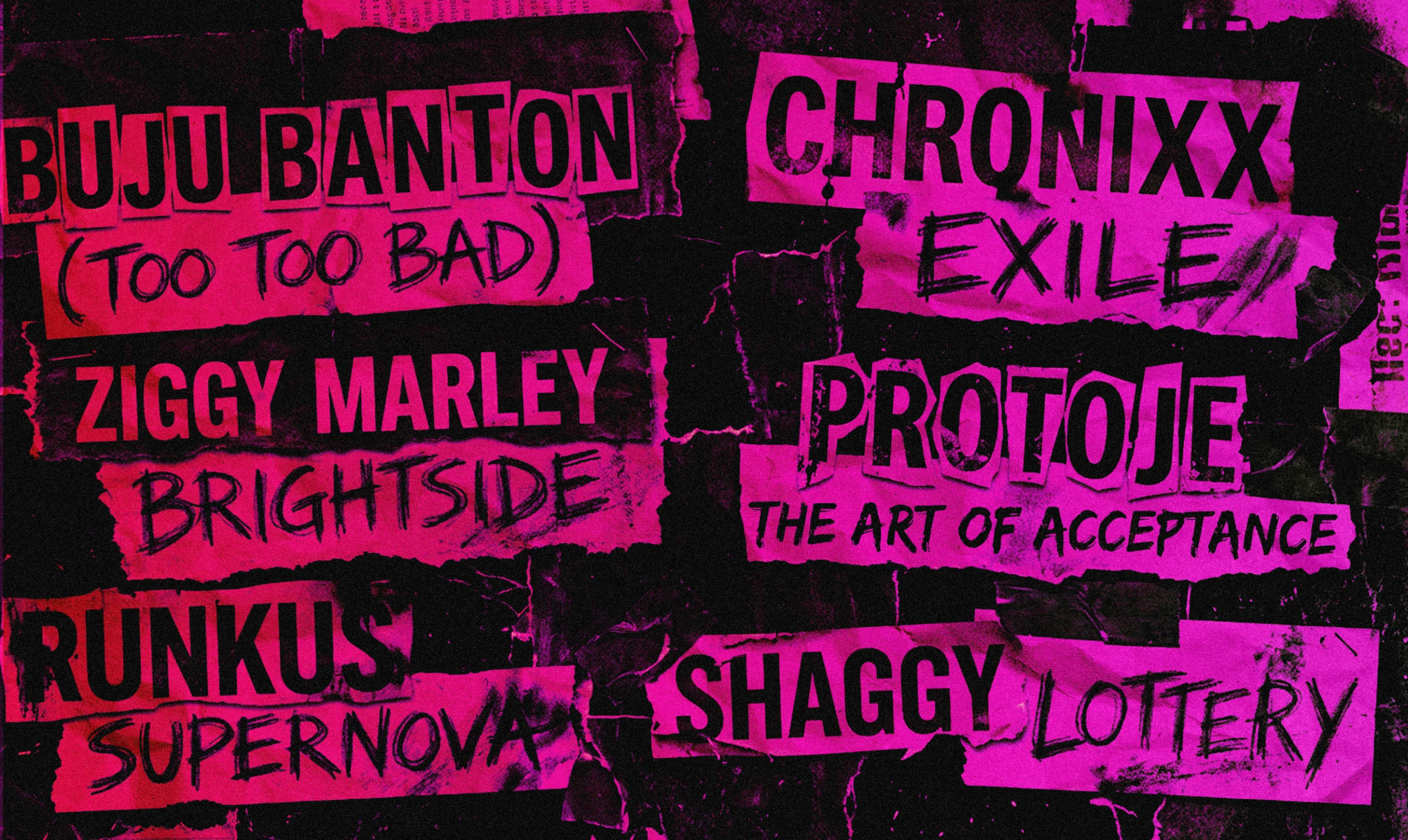
The Recording Academy rolled out the 69th Grammy nominations, and the Best Reggae Album shortlist followed the same script it has used since 1985. The six nominees are Buju Banton (Too Too Bad), Chronixx (Exile), Ziggy Marley (Brightside), Protoje (The Art of Acceptance), Runkus (Supernova), and Shaggy (Lottery).
Nobody in the Caribbean should act surprised. The category is Best Reggae Album. The voting body did what it was invited to do: it picked traditional, live-band reggae records.
The issue is not that live-instrument reggae earned nods on a reggae ballot. The failure sits with an institution that forces two distinct genres into a single five-slot container, leaving dancehall without any real lane.
The Reggae Ballot Did What It Was Built to Do
Blaming this shortlist for bypassing dancehall misses how the Academy functions. This is a consistent, traditional reggae ballot.
Ziggy Marley works strictly in acoustic, Bob Marley-style reggae and pop melodies, picking up his fourteenth career nomination with Brightside. Chronixx built his career on live drums, bass guitar, and conscious messages; Exile relies on that exact live-band sound. Protoje tours with a nine-piece band through In.Digg.Nation, delivering spoken dub poetry and live brass. Runkus built Supernova around live guitars, horns, and vintage 1970s dub production.
Even the two nominees with dancehall roots fit the Academy's vintage profile. Buju Banton earned his eighth nod with Too Too Bad, drawing on 1990s rhythms older voters recognize. Shaggy secured his eighth with Lottery, a commercial project featuring Sting, Robin Thicke, and Mutabaruka.
To the North American and European voters on the committee, this list makes sense. They evaluated vintage, live-instrument music. Expecting them to pick digital 808 subs, aggressive synth patterns, and raw street stories over guitars and saxophones was never going to happen. Because the Grammys lack a dedicated category for Dancehall, Caribbean teams drop modern club records into the Reggae ballot every November, where they get passed over immediately.
The Numbers on the Ground
While the Grammy ballot stayed with vintage live instruments, dancehall drove regional sales and streaming.
Masicka released Forever Reign and set the commercial mark. The LP debuted at No. 4 on the Billboard Reggae Albums chart, registering the highest first-week placement of any Jamaican release in 2026. Songs like "1 Psalm" pulled tens of millions of streams before midsummer. The record dominated car audio, block limes, and fetes across the islands.
He was not alone. Vybz Kartel pushed God & Time to a No. 6 debut on Billboard. Alkaline put NPT into the Top 10. Armanii landed a breakthrough run with The Impact, entering the Billboard Top 10 behind tracks that drove nightlife throughout the year.
All four dancehall albums outsold and out-streamed Protoje's The Art of Acceptance, which entered the Billboard chart at No. 9. When the nominations landed, Protoje was on the ballot, while Masicka, Kartel, Alkaline, and Armanii were gone.
Dancehall sets regional fashion, pulls streaming volume, and fills venues. Under this structure, its highest-charting releases remain sidelined because they do not match the live-band sound of a 1985 award.
What This Means for Trinidad and Bim
If Kingston's biggest commercial records cannot get past the door, the rest of the Caribbean has no shot.
Dancehall is no longer confined to Jamaica. In Trinidad, Trinibad grew from home-studio YouTube uploads into a regional powerhouse, drawing large crowds in London and Miami behind artists like Prince Swanny, Plumpy Boss, and Boy Boy. In Barbados, Bimhall carved out its own heavy lane, with acts like Juk, BadRoss, Mastaa T, and DoeJay pulling millions of plays and shaping local nightlife.
Both movements share dancehall's core foundation: digital beat production, heavy low-end bass, and unfiltered street perspectives. If Masicka, Alkaline, and Kartel can hit the Billboard Top 10, generate eight-figure streams, and still miss out because the only category belongs to live-instrument reggae, what chance does a Trinibad or Bimhall artist from Port of Spain or Bridgetown have?
The current format keeps the frontline of Caribbean street music off the international record.
The Double Standard Elsewhere
The Academy creates space when it wants to. It simply chooses not to do it here.
In June 2026, the Recording Academy added five categories. That included Best Asian Pop Music Performance, introduced to give K-Pop and J-Pop an official home. In 2024, it introduced Best African Music Performance after Afrobeats and amapiano proved too large for general global categories.
When other movements generate commercial momentum, the Academy builds new stages. For Caribbean music, dancehall remains wedged into a four-decade-old category that ignores modern club culture.
Dancehall does not run on acoustic guitars or live drum kits. It has its own riddim culture, tempo range, and live touring market. Forcing it to compete against traditional acoustic arrangements and California reggae-rock bands means club-driven records will be outvoted every year.
Time to Push Back
The Caribbean music community needs to move past complaining about reggae voters picking traditional reggae music. The voters did what the ballot asked. The category itself is the barrier.
Submitting dancehall LPs into a traditional reggae category will keep producing the same outcome. Regional labels, managers, artists, and media need to organize and push for an independent Best Dancehall Album category. Until the Academy builds that platform, the award will continue to skip what the region actually plays.
"We are breaking boundaries, shattering stereotypes, and amplifying the voices of a generation poised to change the world."

Views expressed in interviews belong to contributors and featured creatives.